



Characterized by mountainous conditions and 19 ethnic communities, Điện Biên concentrates on building cultural life from the grassroots, linking the preservation of identity with cultivating civilized lifestyles and promoting public solidarity. Through concrete, practical actions, fine cultural values are steadily safeguarded and disseminated, fostering civilized and progressive residential communities.
Điện Biên defines the cultivation of cultural life as an endeavor that must start at the grassroots, taking families and residential communities as the foundation and local citizens as primary actors. Consequently, the movement “All people unite to build cultural life” has progressively deepened, spreading across every family, hamlet, village, and residential group. Movement contents extend beyond creating cultural families and recognized cultural quarters, being concretized through practicing civilized living standards, maintaining environmental sanitation, and building bright, green, clean, and beautiful landscapes. Concurrently, localities preserve, transmit, and promote the fine traditional values of ethnic groups, establishing healthy, sustainable cultural environments directly from grassroots communities.
The province attaches importance to enhancing the quality of cultural, artistic, physical training, and sporting activities. Cultural institutions across communes and wards receive focused investment, helping satisfy the creative and cultural enjoyment needs of diverse population segments. Presently, the entire province features 932 cultural houses and community gathering centers; 45 out of 45 communes and wards possess cultural and sports houses, achieving 100%. Across the province, there are currently 7 stadiums, 144 soccer pitches, 4 athletics tracks, 225 pickleball courts, 138 training gyms (including 33 multi-purpose training facilities), 34 swimming pools, 100 basketball courts, 466 volleyball courts, 838 badminton and shuttlecock kicking courts, and over 300 other designated sports areas.
.jpg)
As an established routine every afternoon following work, Vũ Huy Toàn, residing in Thắng Lợi hamlet, Tủa Chùa commune, heads with peers to the cultural house to exercise and play sports. Toàn shared that since the spacious cultural house was erected, they gather every afternoon to work out, improving their physical health while conversing and reinforcing neighborly bonds. The hamlet’s atmosphere has grown cheerful and vibrant. The cultural house has truly become a shared communal space, bringing residents closer, strengthening unity, and joining hands to build an increasingly civilized, clean, and beautiful hamlet.
Điện Biên is steadily creating harmony between preserving cultural identity and cultivating civilized lifestyles, ensuring traditional values are not merely safeguarded but actively manifested in daily life. Cultural values are transmitted across generations and promoted through community activities suited to practical realities. Culture thereby functions as a social fabric uniting communities, enriching spiritual life, and arousing endogenous strength among the people. The entire province currently counts 24 cultural heritages inscribed on the national inventory of intangible cultural heritage, including two heritages inscribed by UNESCO on the Representative List of the Intangible Cultural Heritage of Humanity. Alongside this, 1,250 mass art troupes maintain regular operations, creating spaces where cultural values are practiced, taught, and popularized, enriching public spiritual life.
Lèng Văn Viện, Vice Chairman of the Mường Chà Commune People’s Committee, stated that across hamlets and villages, mass art troupes and sports clubs are maintained and organized on a regular basis, providing avenues for residents to interact, train, and share. Through this, neighborhood bonds are reinforced, contributing to shaping healthy, civilized lifestyles within the community.
Following administrative consolidations, Điện Biên province comprises 45 communes and wards. Alongside environmental sanitation, localities concentrate on building civilized living standards, generating positive shifts in communal life. Traditional cultural assets are maintained and elevated; local festivals are organized safely and economically, integrated with cultural and sporting events and folk games that attract wide public and visitor participation. This helps construct a wholesome cultural environment, fosters love for the homeland, deepens solidarity, and elevates community awareness of identity preservation.
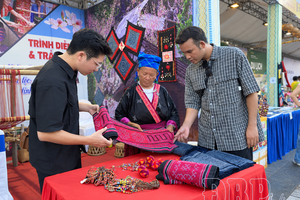
Tìa Ló village in Pu Nhi commune currently comprises 161 households with 781 residents, 100% of whom belong to the Mông ethnic group. Over past years, local villagers have preserved unique traditional cultural traits such as ethnic dress, customs, festivals, folk singing and dance melodies, and traditional games, most notably tù lu spinning tops. Combined with local produce, gastronomy, and traditional agro-forestry production routines, these assets provide conditions to establish authentic experiential tourism offerings bearing a signature identity.
Chá A Mua, Head of Tìa Ló village, remarked that preserving and promoting traditional cultural beauty not only contributes to safeguarding ethnic identity, but opens opportunities for tourism development, enabling villagers to promote signature local values to broader audiences.
Cultivating cultural life across residential communities is not the story of a single movement, but an ongoing process of molding noble values from every home, hamlet, village, and residential group. In Điện Biên, when citizens act as primary subjects, traditional cultural heritage is preserved, civilized lifestyles are forged, and solidarity is deepened, culture becomes an endogenous resource for progress. This provides the bedrock to establish civilized, identity-rich communities, propelling Điện Biên forward sustainably along its new developmental path.
Sầm Phúc
.jpg)
.jpg)
.jpg)
.jpg)
.jpg)
.jpg)
.jpg)
.jpg)
.jpg)
.jpg)
You have 500/500 characters left
Please enter 5 or more characters!!!